
The IB says Al Qaeda suspects that the growing proximity between India and the US will prove fatal for its operations in Afghanistan and with its threat it hopes to slow down Indian designs of helping the US there.
Two kg of RDX and two detonators were recovered on Friday from Unnao, about 50 km from Lucknow, by Uttar Pradesh Special Task Force on the basis of information provided by a Harkat-ul-Jihad-al-Islami militant.
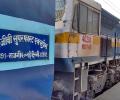
A Bangladeshi national, having links with Harkat-ul-Jihad al-Islami terror outfit, was on Wednesday awarded death sentence by a local court in Jaunpur, Uttar Pradesh for the 2005 Shramjeevi Express train blast which had killed 12 people and injured scores others.

Shoaib Ahmed Mirza alias Chhotu (35), a resident of Hubbali city in Karnataka, is the fifth person to be arrested in the case, they said.

Two women were arrested and remanded to police custody for two weeks on Sunday in connection with the explosion at Khagragarh here that left two suspected militants dead.

Loopholes, lack of crucial evidence and lighter charges filed against those arrested in connection with the assassination of right-wing leaders are indicators of the NIA not being confident about its investigation. Vicky Nanjappa/Rediff.com reports.

Bangladesh on Wednesday executed banned Harkat-ul-Jihad al-Islami chief Mufti Abdul Hannan and his two associates for a 2004 attack on a shrine that killed three people and wounded the British high commissioner at the time.
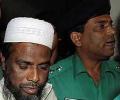
Eight Harkat-ul-Jihad al-Islami terrorists, including its chief, were sentenced to death by a Bangladeshi court on Monday for a 2001 bomb attack targeting Bengali new year celebrations that claimed 10 lives.

Tahawwur Hussain Rana, a Pakistan-born Canadian national and close associate of David Coleman Headley, is set to be extradited to India from the US. Rana was involved in the planning and execution of the 2008 Mumbai terror attacks, which killed 166 people, including six Americans. He assisted Headley in obtaining a visa for India, established a front company in Mumbai, and helped in reconnaissance of targets in Mumbai and New Delhi. Rana was convicted in the US for providing material support to Lashkar-e-Taiba (LeT) and sentenced to 14 years in prison. His extradition to India will allow authorities to question him about his involvement in the Mumbai attacks and potentially uncover new information about the role of Pakistani state actors.

A convict in the 1993 Mumbai serial bomb blasts case, Jalees Ansari, who went "missing" while on parole, was arrested on Friday from Kanpur in Uttar Pradesh, an official said. Ansari (68), a Mumbai resident who was serving a life term in a Rajasthan jail, was nabbed in a joint operation by Maharashtra's Anti-Terrorism Sqaud and the Uttar Pradesh Special Task Force (STF), he said.

The arrest of Indian Mujahideen operative Abdul Sattar is proving to be a boon for the National Investigation Agency which has found that a Students Islamic Movement of India activist based in Dubai had acted as a key middle man in the setting up of the IM.

A team of South Zone Task Force on Thursday nabbed Mohammed Nasir of Bangladeshi origin (who had migrated to Pakistan) on charge of having close links with HuJI and helping a IM operative, an accused in the 2013 Dilsukhnagar twin blast.
The outlawed terror group Indian Mujahideen is more lethal and resilient because of the support it receives from Pakistan, according to a new report by an American think-tank.

The CIA released 4,70,000 additional files seized in May 2011 when US Navy SEALs burst into the Abbottabad compound and shot dead Laden.

If viewed as a part of the Al Qaeda's radicalisation effort to produce jihadists out of discontented Muslim youth in India, the call could well have a much larger dimension, both in the near as well as long term, directly impacting on national security, says Bibhu Prasad Routray.

Intelligence agencies draw a list of terror outfits that pose the gravest threat to India. Vicky Nanjappa reports
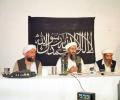
Al Qaeda's reclusive chief Ayman al-Zawahiri, who played a central role in the 9/11 terror attacks and later created the group's regional affiliate in the Indian subcontinent, was killed in a US drone strike in Afghanistan's Kabul, in the biggest blow to the global terror network since killing of its founder Osama bin Laden in 2011 in Pakistan.

Sheikh Hasina's government has launched a relentless war against terrorism since the Dhaka cafe carnage in July 2016, but as Bangladesh's terror networks exploit new technologies and new tactics, the challenge to eliminate jihad gets tougher, points out Binodkumar Singh.
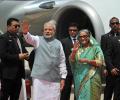
'When we have a terrorist outfit in a neighbouring nation, we need to do whatever we can to neutralise that threat,' says Ramananda Sengupta.

How to deal with a country that has made export of terror a reason to make the world notice and fund it? Rediff.com contributor Sanjeev Nayyar offers a few suggestions

Indian intelligence agencies have often claimed that left-wing extremists are trying to make inroads in the militancy-hit regions of north-east to foment further unrest. But Jaideep Saikia, noted terrorism and conflict analyst, claims, "People who speak of Maoism taking roots in the north-east have not read history".
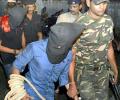
'Counter terrorism does not appear to be good guys fighting the bad ones; it is about people being picked up, detained and charged with crimes they did not commit.'
 © 2026 Rediff.com - Advertise with us - Disclaimer - Privacy Policy - Sitemap - Feedback - About us - Terms of use - Grievances